Skip to content
Pain

The Efficacy of Caldolor

See How Caldolor Can Reduce Pain and Opioid Use in Different Surgical Settings

Demonstrated Pain Relief in Pediatrics1

Proven Pain Management in Pediatric Patients 3 Months and Older1

Pediatric patients in the emergency department or undergoing surgery are frequently unable to tolerate oral antipyretics, and rectal formulations can be unpredictable. This leaves a need for an intravenous ibuprofen, Caldolor, to manage pain and fever.51

Pediatric Tonsillectomy3

Outcomes:

  • Significant reduction in number of rescue doses of fentanyl while in PACU 1.9 vs 1.6 (p=0.021)
  • Significant reduction in postoperative fentanyl (mcg/kg) 0.9 vs 0.8 (p=0.037)
  • Significant reduction in number patients who received >1 dose fentanyl 40 (62%) vs 31 (42%), p=0.028
  • Significant reduction in postoperative vomiting in 24-48hr 8 (15%) vs 2 (3%), p=0.044; and 0-48hr time frames 18 (33%) vs 7 (11%), p=0.006
  • No difference between groups in time to swallow or time to discharge
  • Treatment emergent AEs: 17% in Caldolor group vs 20% in placebo group
  • No difference in surgical blood loss (p=0.662)
  • No difference in incidence of postoperative bleeding or need for surgical re-exploration
Study description

Multicenter, randomized, double-blind placebo-controlled trial in patients 6-17 years of age undergoing tonsillectomy.

  • Randomized 1:1 to Caldolor 10 mg/kg IV or placebo
    • Administered over 10 minutes at induction of anesthesia
  • Fentanyl (0.5 mcg/kg IV) available in PACU for rescue analgesia

Primary Objective: To determine efficacy of Caldolor compared to placebo on reduction of postoperative fentanyl doses.

Secondary Outcomes: Amount of weight-based fentanyl in postoperative period prior to discharge, pain scores, time to discharge, first swallow, time to first rescue analgesic dose, incidence of postoperative nausea/vomiting, amount of postdischarge analgesic use, parent satisfaction survey.

N = 161

  • Caldolor = 82
  • Placebo = 79

Demonstrated Pain Relief in Adults1

Rib Fracture20

Outcomes:

  • Caldolor reduced morphine requirements significantly over the first 7 days (19 mg ± 16 mg vs 32 ± 24 mg; p<0.0001). Significant morphine reductions occurred starting on day 3. 
  • Caldolor significantly lowered the highest and lowest pain scores. 
  • On average, patients that received Caldolor stayed in the hospital 1 day less, (4.4 ± 3.3 vs 5.4 ± 2.9 days; p=0.32).
Study description
  • This study is a retrospective chart review analyzing the pain management of patients 18 years of age or older who sustained rib fractures and were treated in a Level I trauma center.
  • Patients were included if they sustained at least one rib fracture, required inpatient admission, and received narcotics with or without Caldolor for pain management.
  • Pain medication requirements over the 1st 7 hospital days were evaluated.

N = 42

  • Treatment = 21
  • Control = 21

Transsphenoidal Surgery6
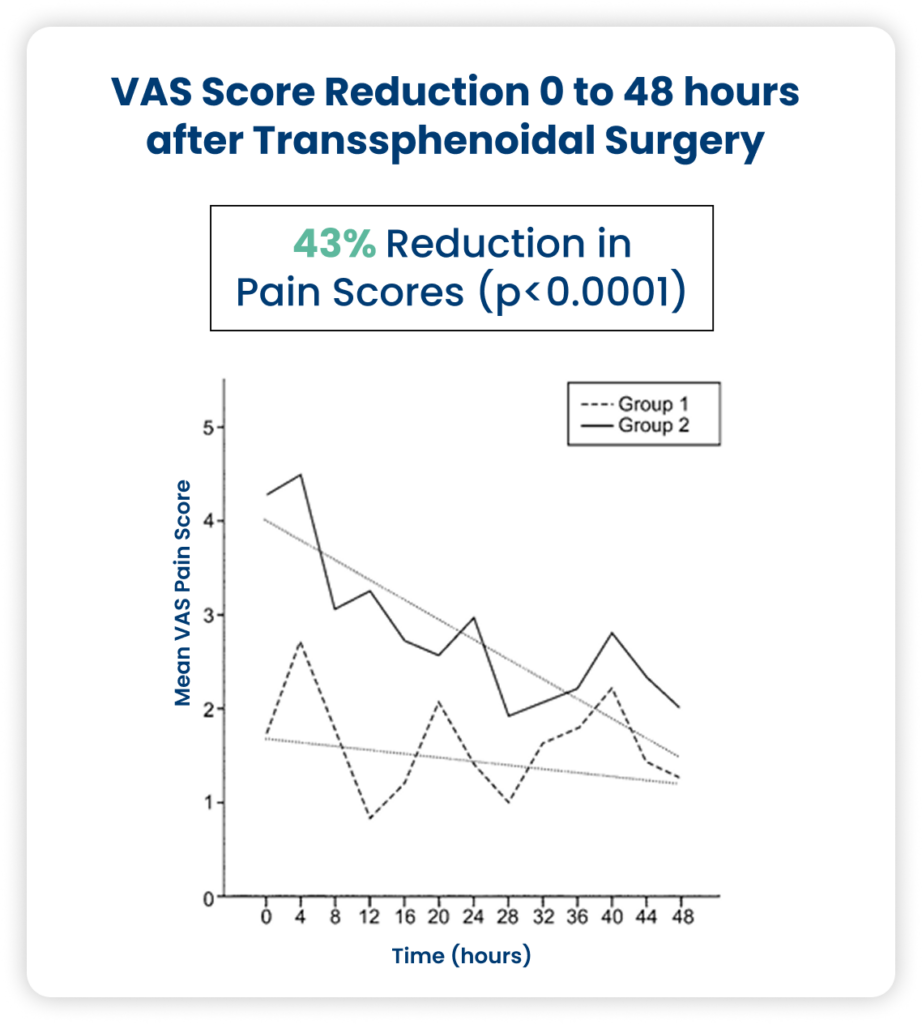
Pain 1
Study description

Single-center, randomized, double-blind, placebo-controlled intervention trial in adult patients undergoing transsphenoidal surgery for pituitary adenoma.

Randomized to

  • Group 1: scheduled Caldolor IV 800 mg q 8 hr + scheduled oral acetaminophen 1000 mg PO q 6 hr + rescue opioids

OR

  • Group 2: IV placebo + scheduled oral acetaminophen + rescue opioids

Primary Outcome: pain scores (VAS, rated 0-10) every 4 hours for 48 hours after surgery.

Secondary Outcome: opioid use in the 1st 48 hours after surgery, estimated by oral morphine equivalents.

N = 62

  • Group 1 = 28
  • Group 2 = 34

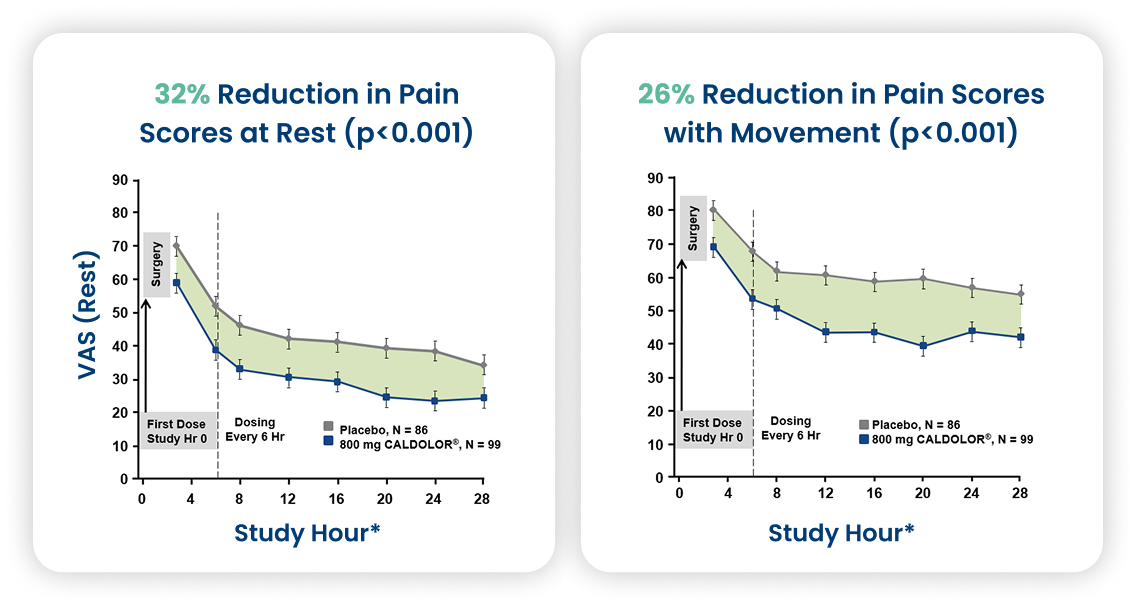
Elective Orthopedic2

Pain 2
Study description

Multi-center, randomized, double-blind, placebo-controlled in patients undergoing elective orthopedic surgery.

Randomized 1:1 Caldolor 800 mg or placebo

  • Administered pre-op and every 6 hours
  • Morphine PCA for breakthrough pain

Primary Outcome: Self-reported pain assessment scores at rest and with movement at hours 6-28 post-op
Secondary Outcomes: Morphine requirement at hour 28 post-op

N = 185

  • Caldolor = 99
  • Placebo = 86

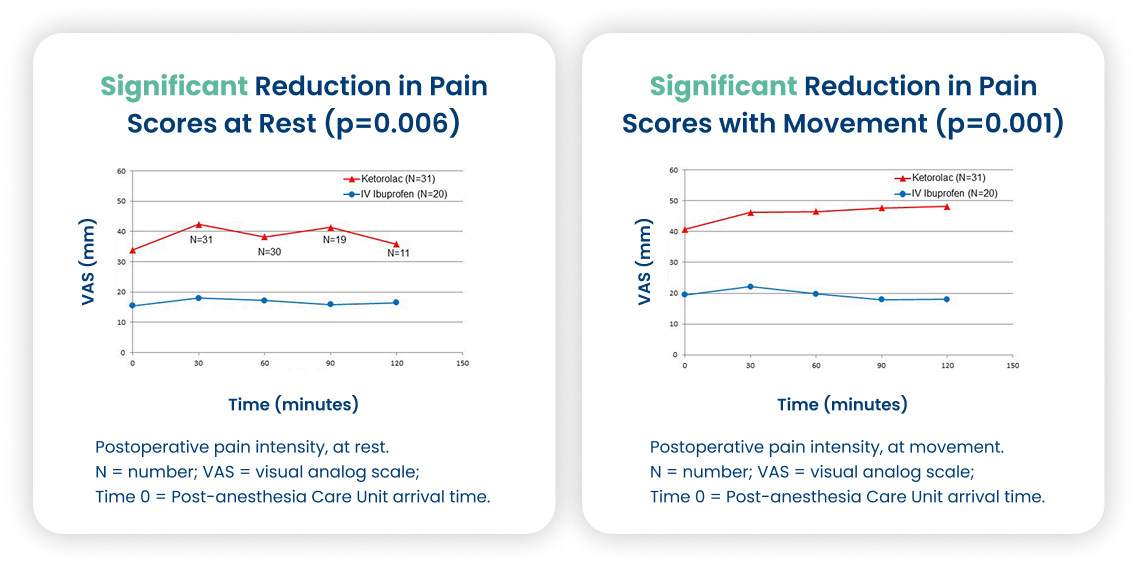
Arthroscopic Knee16

Pain 3
Study description

Single-center, randomized, double-blind, parallel, active comparator in patients undergoing arthroscopic knee surgery.

Randomized:

  • Caldolor 800 mg IV x 2 administered pre-op and then 4 hours later
  • IV Ketorolac 30 mg at end of surgery
  • IV Hydromorphine PRN in PACU for breakthrough


Primary Outcome: Self-assessment pain scores at rest and movement

  • Every 30 min until PACU discharge and then at 24 hours

Secondary Outcome: Breakthrough pain medication required at 24 hours post-op, adverse events, satisfaction questionnaire. 

N = 53 (2 excluded later due to failing to meet criteria)

  • Caldolor 800mg = 20
  • Ketorolac = 31

Oral Surgery: Third Molar Removal18

Outcomes:


Postoperative pain scores in the Caldolor group were significantly lower than those in the IV acetaminophen group at 4 hours (p=0.004), 24 hours (p=0.019), and 48 hours (p=0.017).


After 72 hours, at the end of the acute inflammatory phase, reduced reported pain was an observed trend in the Caldolor group compared with the IV acetaminophen group.
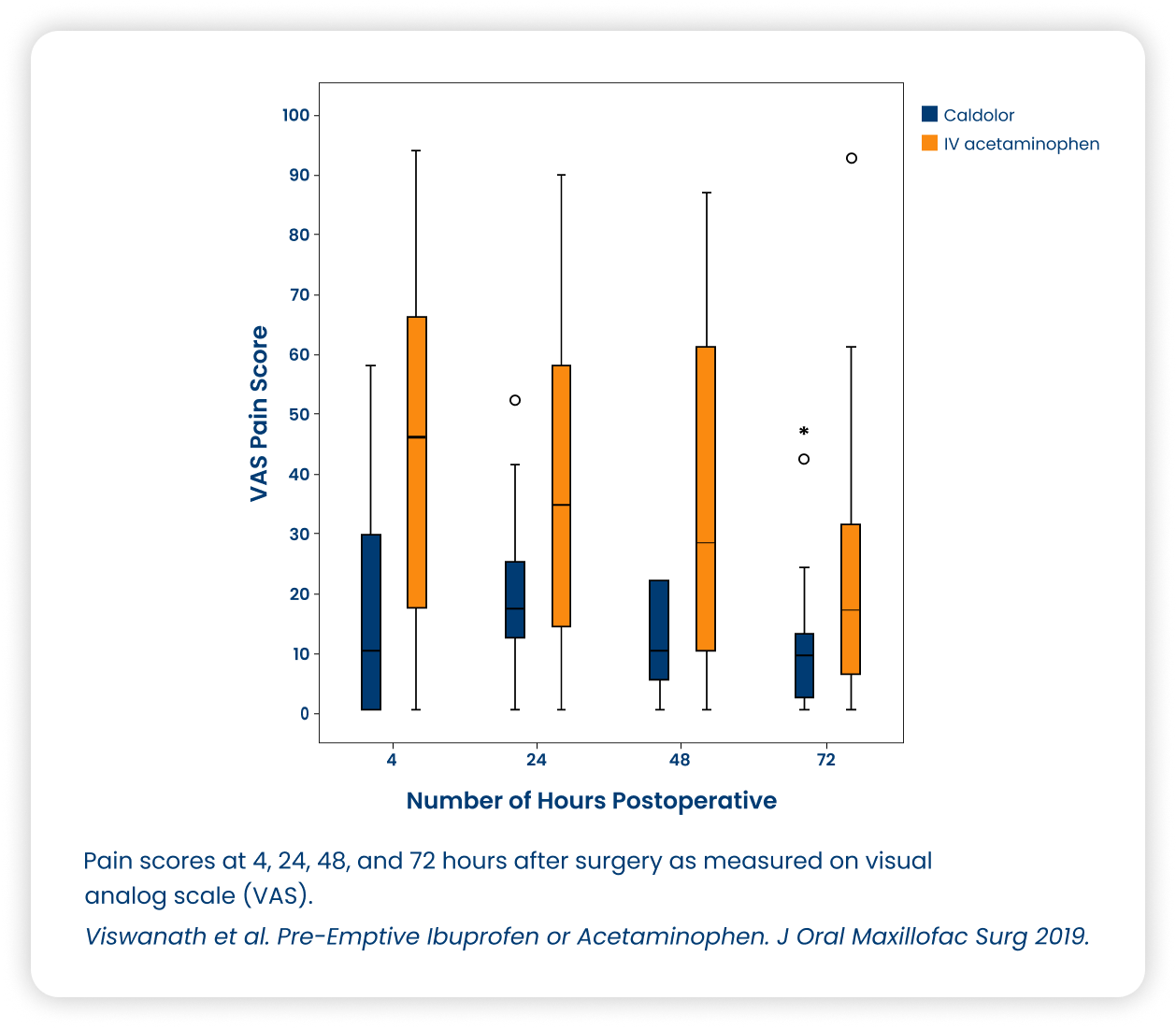
Pain Chart 1
Study description

Randomized, single-blinded conducted in patients undergoing surgical extraction of 2 or more impacted third molars under deep sedation.

Compared 2 interventions:

  • 800 mg of Caldolor (Caldolor)
  • 1,000 mg of IV acetaminophen (Ofirmev)

Primary outcome: postoperative pain measured on a visual analog scale at different time points.

Secondary outcome: amount of postoperative analgesic medication taken in both groups.

N = 58 (only 41 completed the study)

  • Caldolor = 19
  • IV acetaminophen = 22

Laparoscopic Cholecystectomy40

Outcomes:

  • Quality of Recovery 40 Questionnaire (QoR40) scores significantly higher for patients in the Caldolor group versus placebo on POD 1 (p<0.001).
  • Significantly lower Modified Fatigue Impact Scale (MFSS) scores were seen in the Caldolor group indicating less fatigue in the PACU (P = 0.01), 
POD 1 (P < 0.001), and POD 3 (P = 0.03).
  • Cortisol (a hormone released due to stress) levels significantly lower in the PACU for the Caldolor group compared to placebo (p=0.01).
  • Norepinephrine levels were significantly lower intraoperatively in the Caldolor group compared to placebo (p=0.004).
  • Administering Caldolor prior to surgery results in a meaningful difference in the levels of systemic catecholamines, inflammatory cytokines and stress hormones.
Study description

Prospective, randomized, controlled, double-blind, muli-center in adults scheduled for laparoscopic cholecystectomy.

Randomized

  • Caldolor 800 mg pre-operatively
  • Placebo

Primary Outcome: Neurobehavioral assessment pre-op, in PACU, Post-op Day (POD) 1 and 3

  • 40-item Quality of Recovery Questionnaire 

Secondary Outcome: Neurobehavioral assessment pre-op in PACU, POD 1 and 3

  • 9-item Modified Fatigue Severity Scale
  • 15-item Geriatric Depression Scale

Biomarkers:
N = 55 (Caldolor 800 mg = 28; placebo = 27)

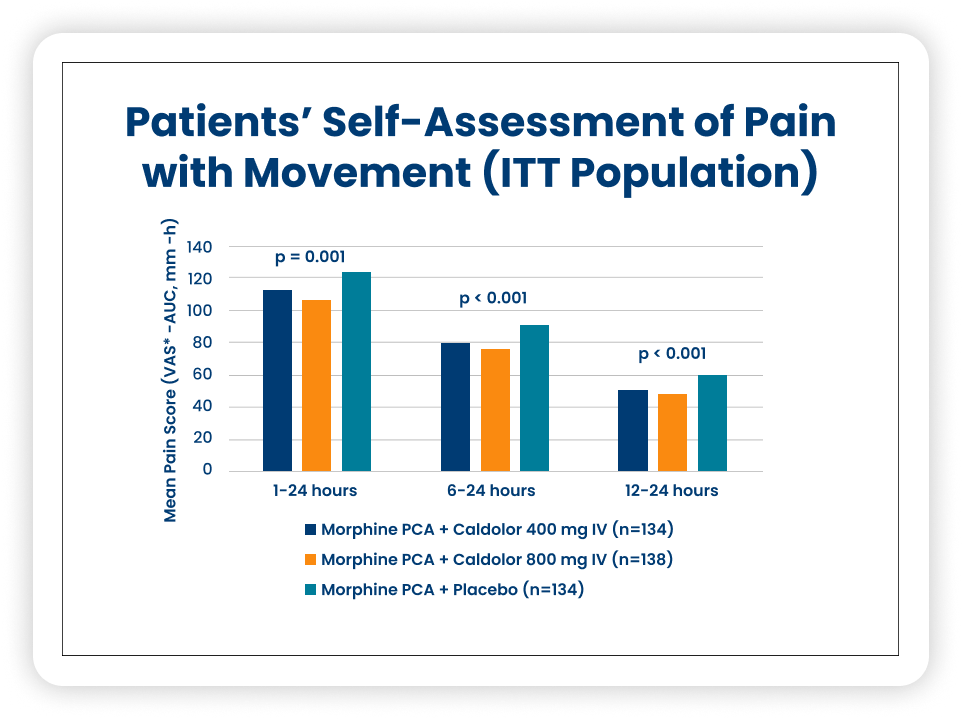
Elective Orthopedic or Abdominal Surgery5
Pain 5
Pain 6
Study description

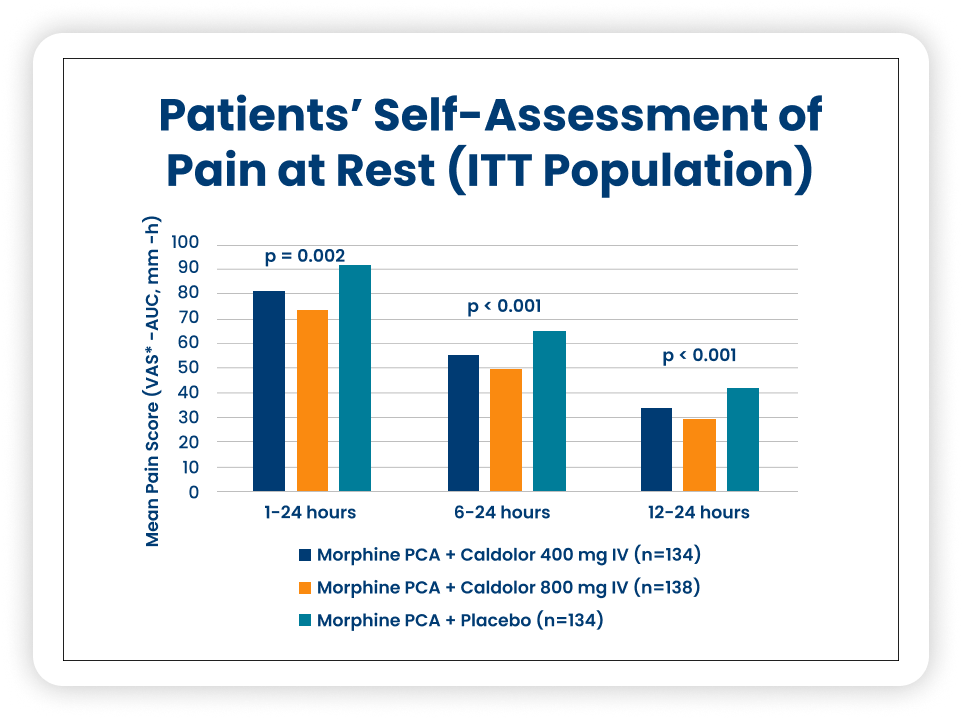
Multi-center, randomized, double-blind, placebo-controlled trial in patients that underwent elective orthopedic or abdominal surgery.

  • Randomized 1:1:1 Caldolor 400 mg, Caldolor 800 mg, placebo
  • Dosed intra-op then every 6 hours x 8 doses (could continue up to 5 days (120 hours))
  • Morphine PCA used for breakthrough pain

Primary Outcome: Morphine use in first 24 hours

Secondary Outcomes: Patient self-report scores at rest and with movement

N = 406

  • Caldolor 400 mg: 134
  • Caldolor 800 mg: 138
  • Placebo: 134

Elective Abdominal Hysterectomy17
Pain 7
Study description

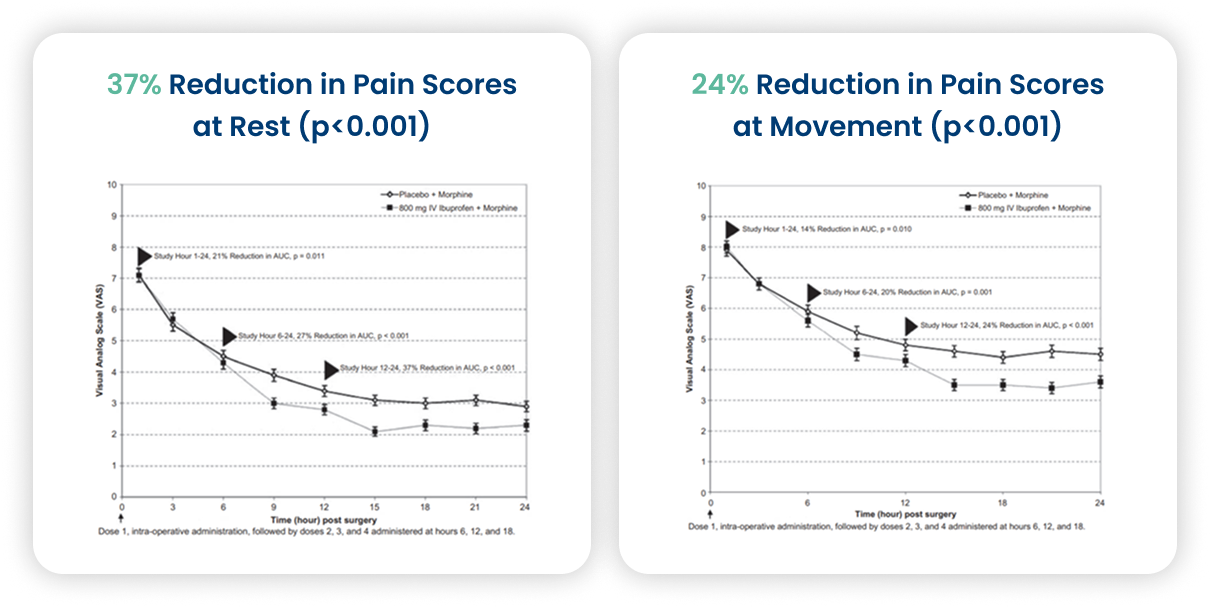
Multi-center, randomized, double-blind, placebo-controlled trial in female patients undergoing elective total abdominal hysterectomy and expected to be hospitalized post-op

  • Randomized 1:1 Caldolor 800 mg or placebo
  • Administered first dose at skin closure every 6 hours up to 5 days
  • Morphine PCA used for breakthrough pain

Primary Outcome: Morphine requirement at 24 hours

Secondary endpoints: Self-reported pain intensity, time to first morphine dose, incidence of opioid-related ADRs, ambulation, time to liquid and solid intake, length of stay

N = 319

  • Caldolor = 166
  • Placebo = 153

Older Population15

Outcomes:

  • 24.0% reduction in pain at rest (p=0.008)
  • 20.0% reduction in pain with movement (p=0.001) between 6-24 hours post-surgery
  • 23.2% reduction in total morphine requirements (p=0.031) compared to placebo
Study description

Post hoc subgroup analysis performed with data from four prospective clinical studies in which Caldolor was administered for treatment of pain and/or fever in hospitalized patients every 6 hours for up to 5 days.


N = 1041

Package Insert

Caldolor is a nonsteroidal anti-inflammatory drug indicated in adults and pediatric patients aged 3 months and older for the:

  • Management of mild to moderate pain, including postoperative pain
  • Management of moderate to severe pain, including postoperative pain, as an adjunct to opioid analgesics
  • Reduction of fever

This Product Includes the Following Boxed Warning:

Warning: Risk of Serious Cardiovascular and Gastrointestinal Events

Cardiovascular Thrombotic Events

  • Non-steroidal anti-inflammatory drugs (NSAIDs) cause an increased risk of serious cardiovascular thrombotic events, including myocardial infarction and stroke, which can be fatal. This risk may occur early in treatment and may increase with duration of use.
  • Caldolor is contraindicated in the setting of coronary artery bypass graft (CABG) surgery.

Gastrointestinal Bleeding, Ulceration and Perforation

  • NSAIDs cause an increased risk of serious gastrointestinal (GI) adverse events including bleeding, ulceration, and perforation of the stomach or intestines, which can be fatal. These events can occur at any time during use and without warning symptoms. Elderly patients and patients with a prior history of peptic ulcer disease and/or GI bleeding are at greater risk for serious GI events. 

Important Dosage and Administration Instructions

  • Caldolor Injection 800 mg/8 mL (100 mg/mL) vials must be diluted prior to administration.
  • Caldolor Injection 800 mg/200 mL (4 mg/mL) bags are ready to use.
  • Do not exceed 3,200 mg total daily dose in adults. Do not exceed 40 mg/kg or 2,400 mg, whichever is less, total daily dose in pediatric patients less than 17 years of age. In pediatric patients 3 months to less than 6 months of age, the dosage is limited to a single dose not to exceed 10 mg/kg or 100 mg, whichever is less.


Important Safety Information

Contraindications

  • Caldolor is contraindicated in patients with known hypersensitivity (e.g., anaphylactic reactions and serious skin reactions) to ibuprofen or any components of the drug product, and in patients who have a history of asthma, urticaria, or other allergic-type reactions after taking aspirin or other NSAIDs. Severe, sometimes fatal, anaphylactic reactions to NSAIDs have been reported in such patients. Caldolor is contraindicated in the setting of coronary artery bypass graft (CABG) surgery.


Warnings and Precautions

  • Use with caution in patients with known cardiovascular (CV) disease or risk factors for CV disease, a history of peptic ulcer disease and/or GI bleeding, renal or liver disease or symptoms of hypertension, and heart failure. Use the lowest effective dose for the shortest time period in these patients to reduce the risk of serious adverse events. Avoid use in pregnant women starting at 30 weeks gestation.


Adverse Reactions

  • The most common adverse reactions are nausea, flatulence, vomiting, headache, hemorrhage and dizziness (>5%). The most common adverse reactions in pediatric patients are infusion site pain, vomiting, nausea, anemia and headache (≥2%)

Have Questions or Would like to Stay Informed About Caldolor?

We’re Here to Help!

Contact Form Image