

Caldolor Reducing Opioid Use in Surgical Settings

Caldolor Reducing Pain in Peds and Adults

Caldolor Reducing Fever in Peds and Adults

Caldolor’s Safety Profile
Pediatric Tonsillectomy3
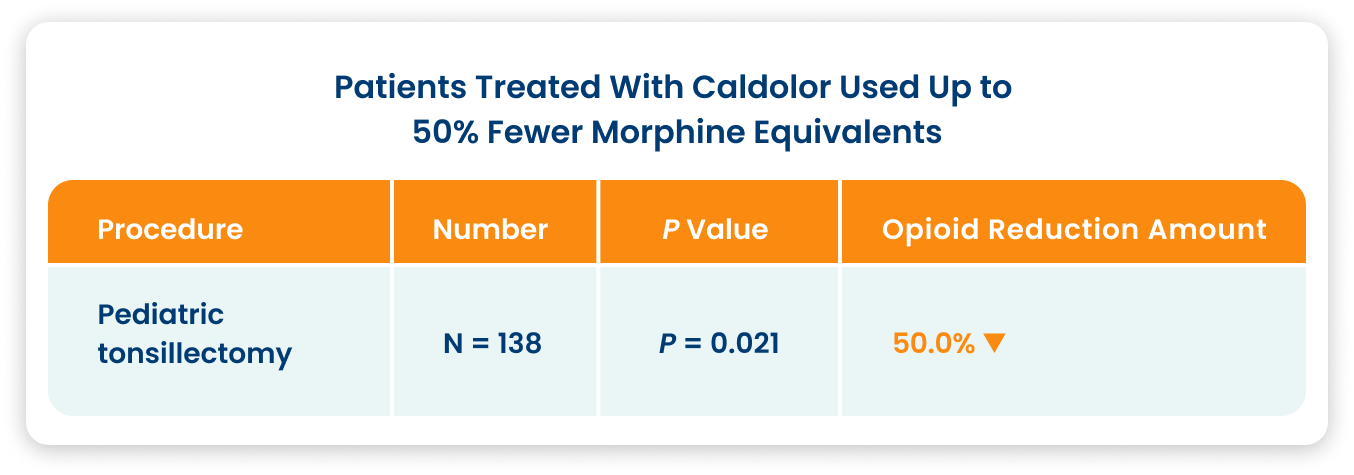
Patients receiving Caldolor required 50% less doses of postoperative fentanyl in PACU, significantly less compared to placebo (P=0.021).
One of the most common pediatric procedures, tonsillectomy, may benefit from opioid reduction when Caldolor is used preoperatively.
This multicenter, randomized, double-blind placebo-controlled, single dose trial included 161 pediatric patients aged 6-17 years undergoing tonsillectomy. The primary endpoint was the number of doses and amount of postoperative fentanyl administered postoperatively for rescue analgesia.
Caldolor demonstrated a significant opioid-sparing effect in pediatric tonsillectomy patients.
Arthroscopic Knee Surgery16
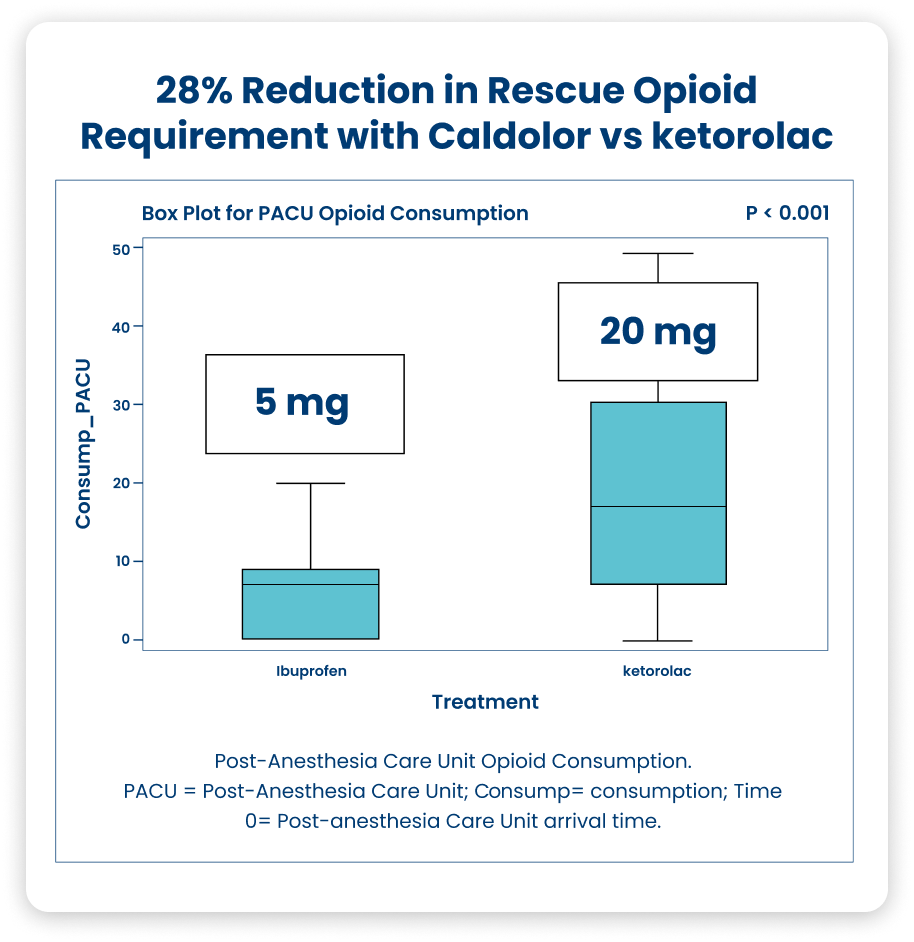
This single-center, randomized, double-blind, parallel, active comparator clinical pilot study was performed to assess the efficacy of two different analgesic treatment regimens: Caldolor and IV ketorolac, for the treatment of postoperative pain pertaining to arthroscopic knee surgery.

Abdominal Hysterectomy17
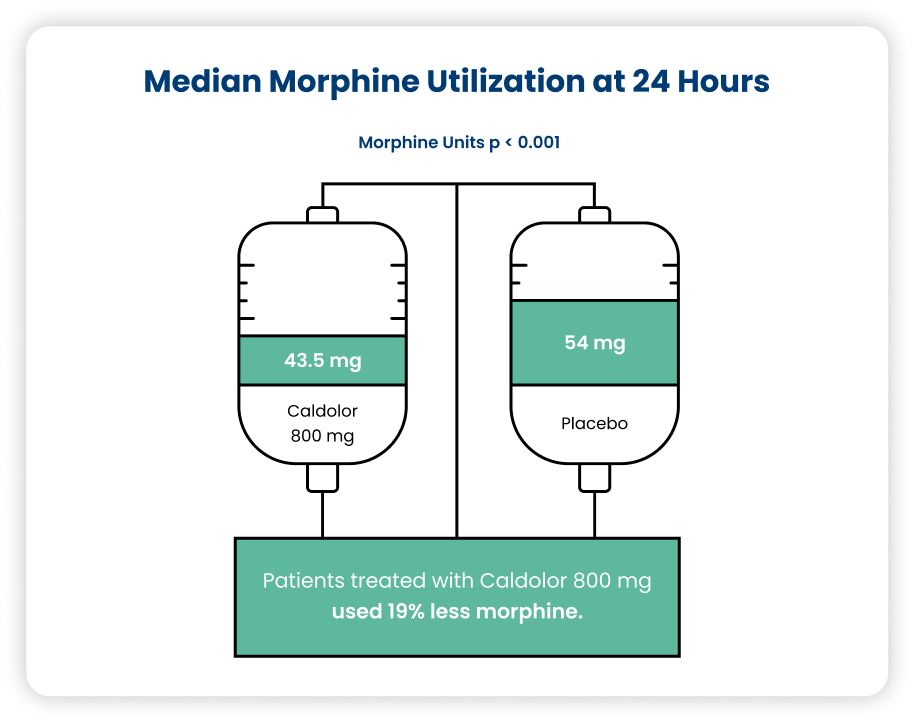
In this multi-center, randomized, double-blind, placebo-controlled trial, safety and efficacy of Caldolor as a postoperative analgesic following abdominal hysterectomy was evaluated. The morphine requirement was significantly reduced by 19% (P < 0.001) for those using Caldolor.
Oral Surgery — Third Molar Removal18
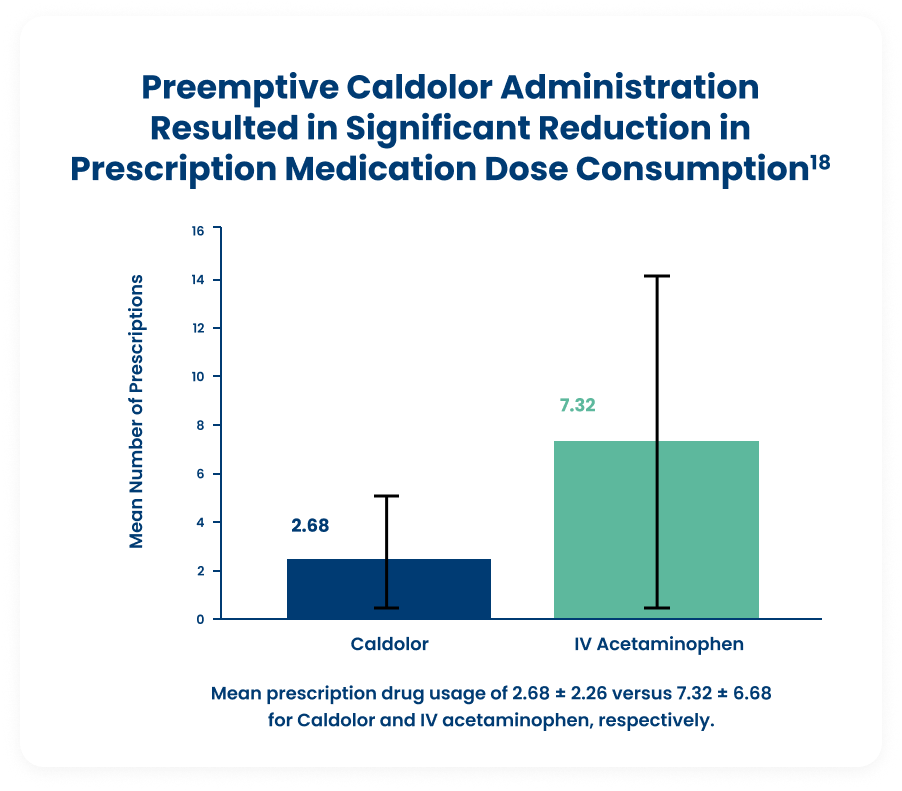
This prospective, randomized, single-blinded clinical trial, compared 800 mg of Caldolor and 1,000 mg of IV acetaminophen. The preemptive analgesic effect of Caldolor showed a significant reduction of prescription drug usage compared to IV acetaminophen (P = 0.005).
Orthopedic Trauma19
This single-center, randomized, double-blind, parallel-group, placebo-controlled trial evaluated the efficacy of Caldolor in the management of acute pain in orthopedic trauma patients and to minimize opioid use. In patients with moderate to severe orthopedic trauma, the initial dose of Caldolor (800 mg) reduced morphine requirements over 48 hours (P = 0.017), with reductions occurring as early as 8 hours. Caldolor showed a significantly longer pain relief time of 6.4 hours compared to the placebo pain relief time of 4.3 hours (P = 0.046).

Rib Fracture20
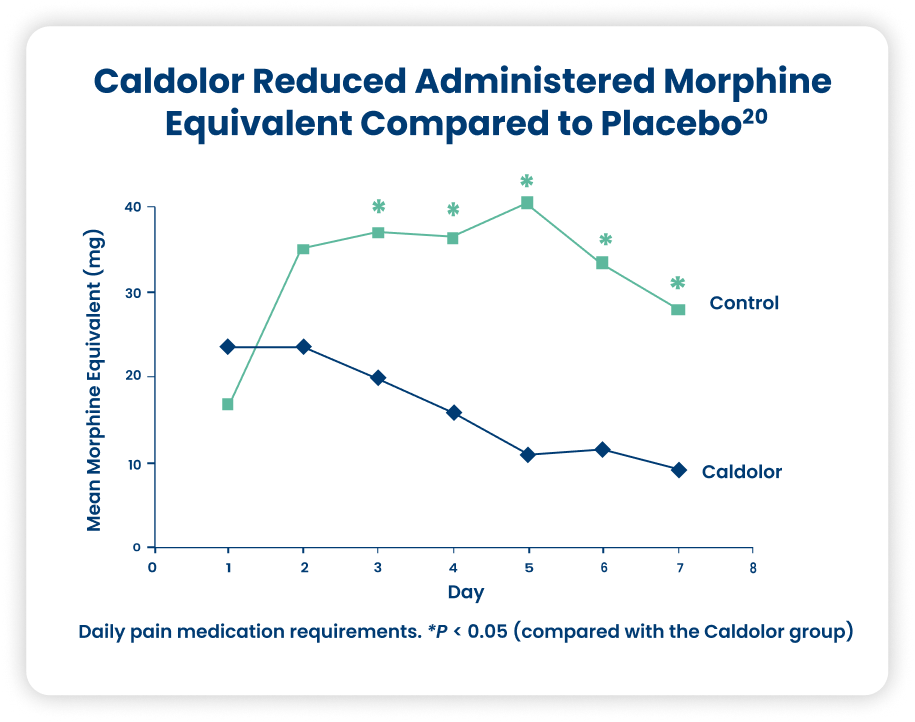
This study is a retrospective chart review analyzing the pain management of patients 18 years of age or older who sustained rib fractures and were treated in a Level I trauma center. For those receiving Caldolor, the total weekly morphine-equivalent requirement was significantly decreased (P = 0.007). The daily morphine equivalent requirement did not differ between the study groups on Day 1 or Day 2; however, narcotic requirement was significantly decreased in Caldolor patients on each subsequent day of therapy (Days 3 through 7).
Transsphenoidal Surgery6
This single-center, randomized, double-blinded, placebo-controlled study involved adult patients with planned transsphenoidal surgery. Group 1 patients were treated with scheduled Caldolor, scheduled oral acetaminophen, and rescue opioids. Group 2 patients were treated with IV placebo, scheduled oral acetaminophen, and rescue opioids. Caldolor resulted in significantly decreased opioid use when compared to placebo.

Elective Orthopedic & Abdominal Surgery5
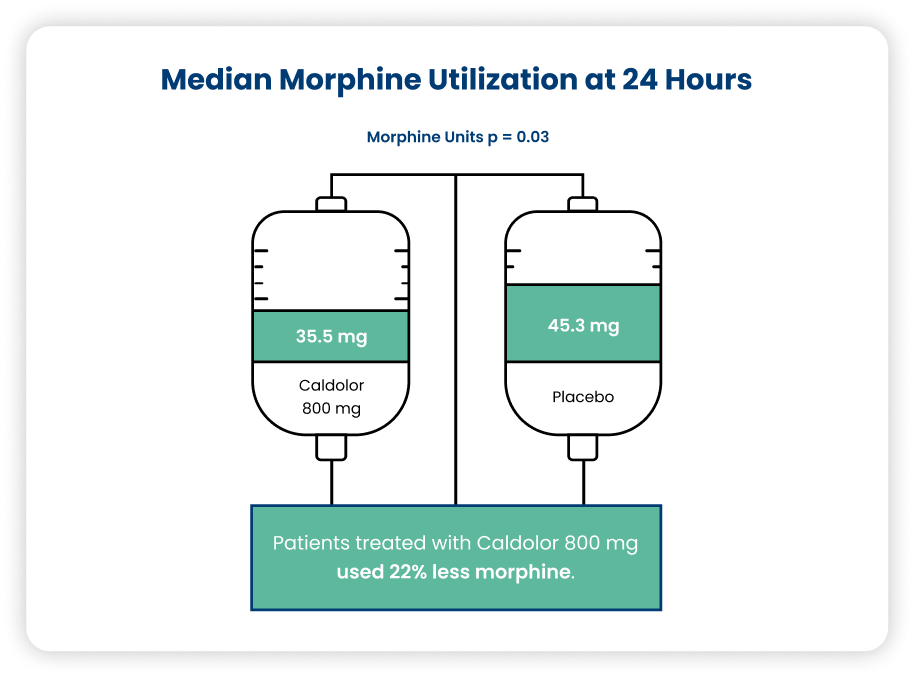
This multi-center, randomized, double-blind, placebo-controlled trial showed that there was a significant reduction in morphine requirements in patients that received intra-operative Caldolor vs placebo at 24 hours. A 22% reduction of morphine use was recorded in patients who were treated with Caldolor.
Elective Orthopedic2
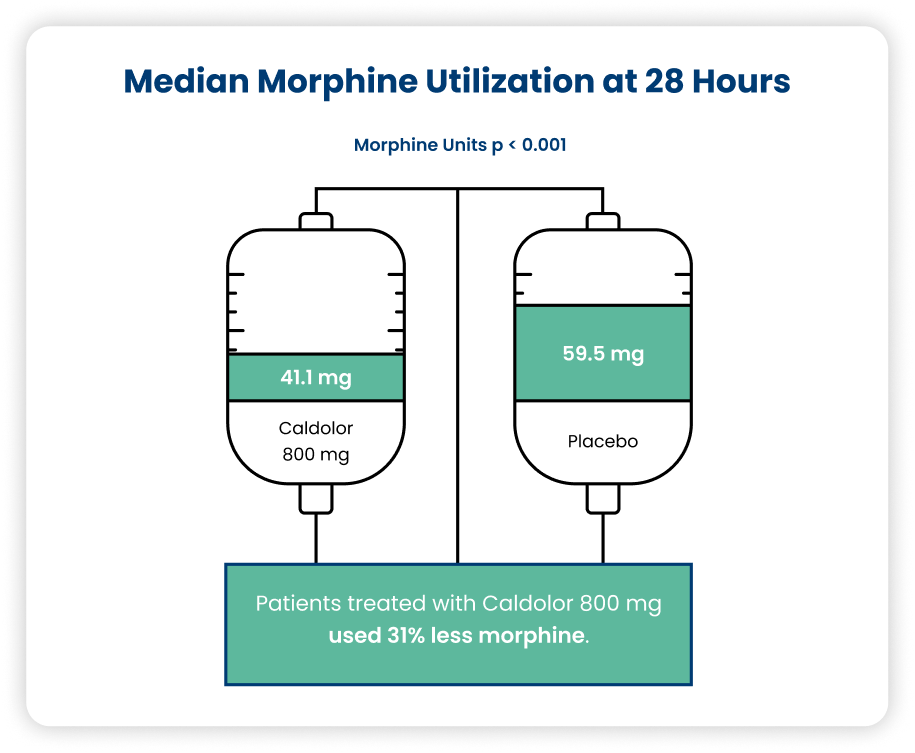
In this multi-center, randomized, double-blind, placebo-controlled study with patients undergoing elective orthopedic surgery, patients in the placebo group required 59.5 mg of morphine during the 28-hour observation period while patients treated with Caldolor required 41.1 mg of morphine. Thus in a setting where patients had equal access, patients who received Caldolor used 30.9% less morphine (P < 0.001) than those receiving placebo.
Have Questions or Would like to Stay Informed About Caldolor?
We’re Here to Help!